Quality standards
ISO Standards
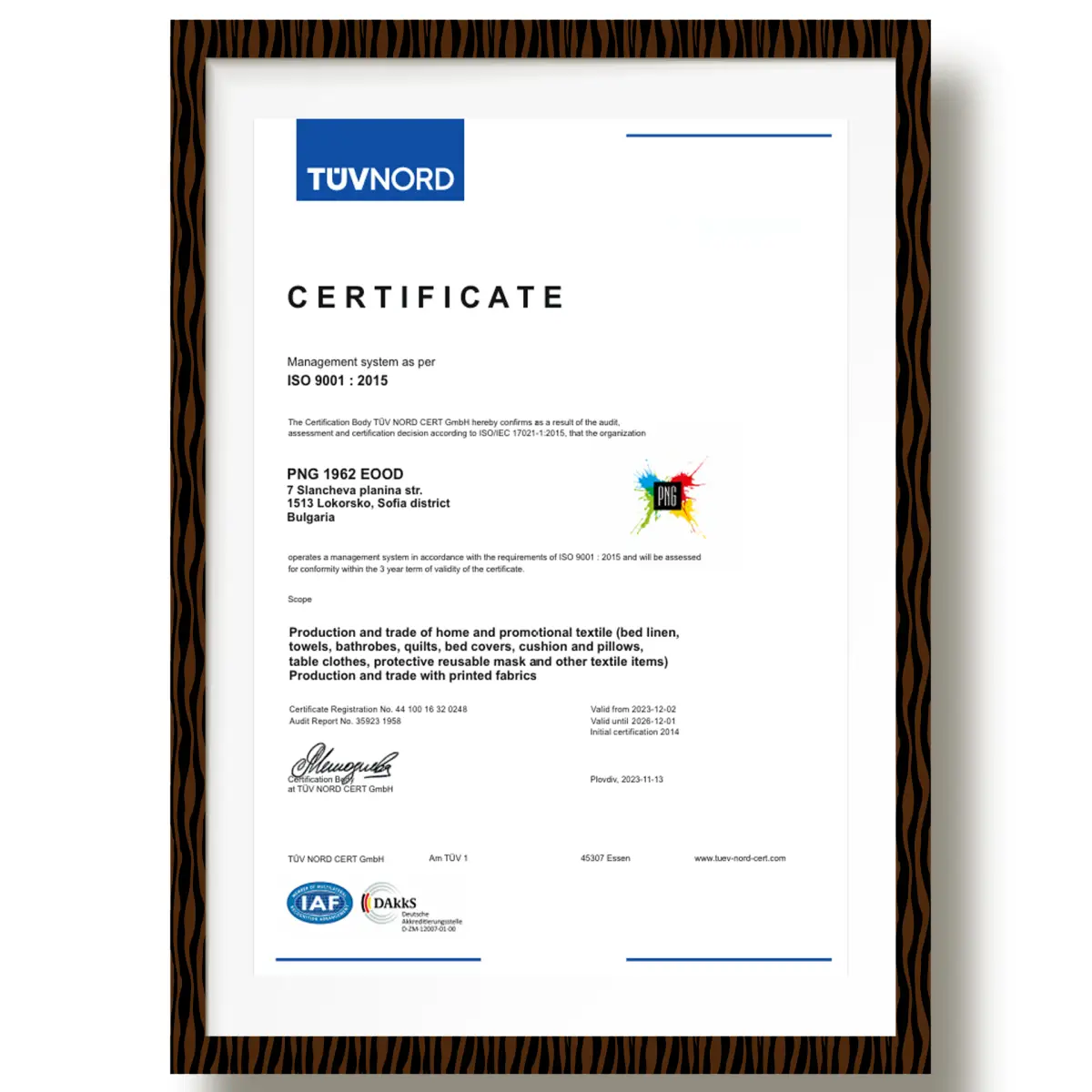
ISO 9001: Quality Management Systems
ISO 9001 is the international standard for quality management systems (QMS). It sets out the criteria for a QMS and is
based on several quality management principles, including strong customer focus, senior management involvement, a
process approach, and continuous improvement.
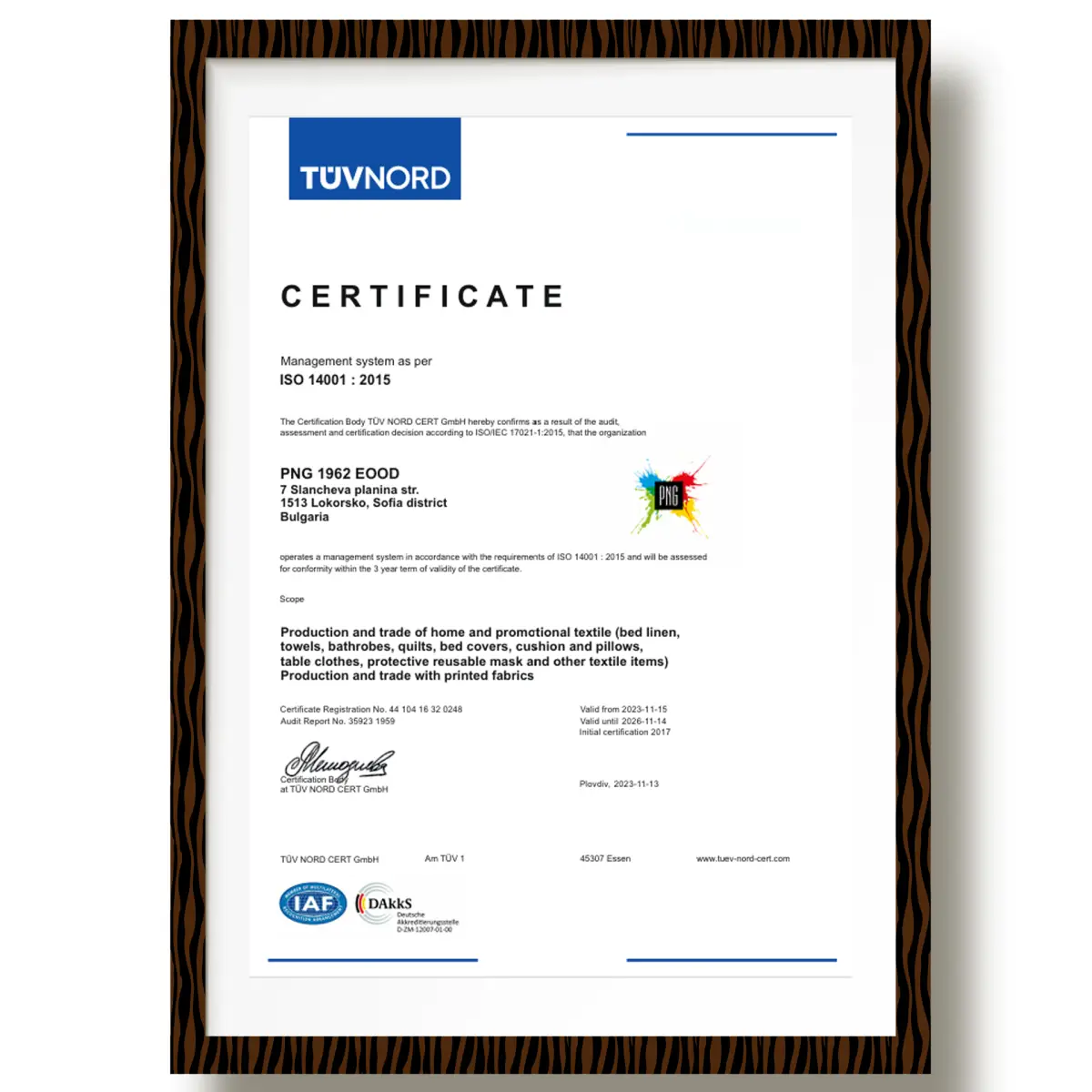
ISO 14001: Environmental Management Systems
ISO 14001 provides a framework for an effective environmental management system (EMS). It helps organizations
improve their environmental performance through more efficient use of resources and reduction of waste.
ISO 45001: Occupational Health and Safety Management Systems
ISO 45001 provides an internationally-recognized framework for managing occupational health and safety risks. It enables
organizations to systematically assess hazards and implement risk control measures, leading to reduced workplace injuries,
illnesses and incidents.
ISO 50001: Energy management Systems
ISO 50001:2018 is a standard based on energy consumption analysis, the postulation of organizational energy policies,
and the creation of energy management frameworks and programs that contribute to more efficient energy management.
Certificates
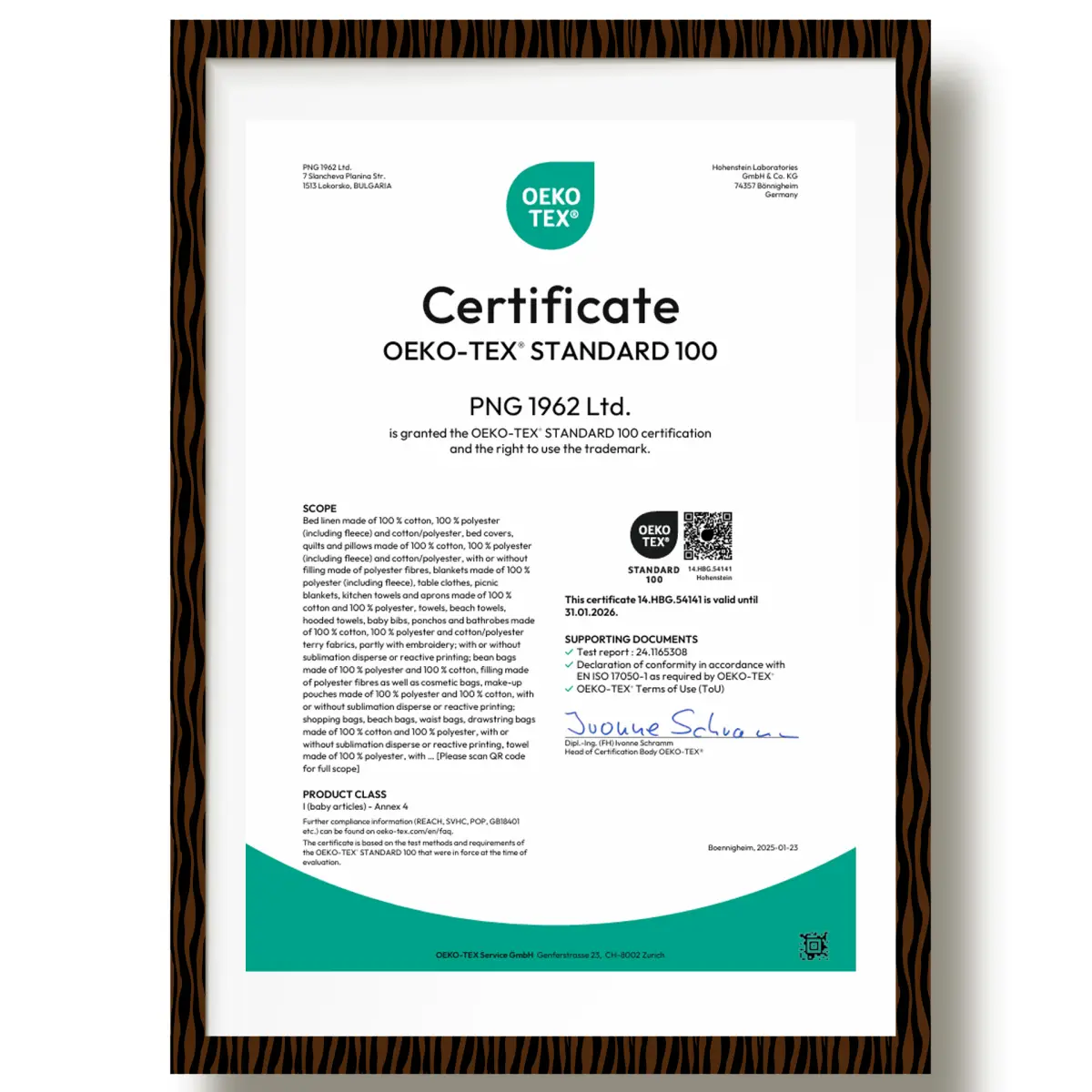
OEKO-TEX®
OEKO-TEX® STANDARD 100 is a label for textiles tested for harmful substances. It sets the benchmark for textile safety,
from yarn to finished product. Every item bearing the STANDARD 100 label is certified as having passed safety tests for
the presence of harmful substances.
TÜV NORD
Certification is carried out in accordance with the General Conditions for the Certification of Management Systems. This
certificate is the written proof about the approved quality management system.
SMETA 4-PILLAR
SMETA (Sedex Members Ethical Trade Audit) is a globally recognized ethical audit method that assesses four pillars:
Labor standards, health and safety, environment, and business ethics.